Two Player Game: 1v1 Challenge
Game NotchArcade
4.691.00 Reviews
- Version
- 1.9.4
- Installs
- 10.00M
- Age Rating
- Everyone
Screenshots
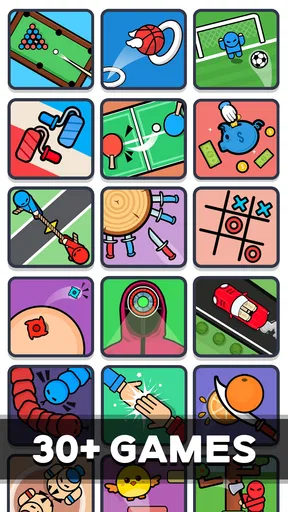
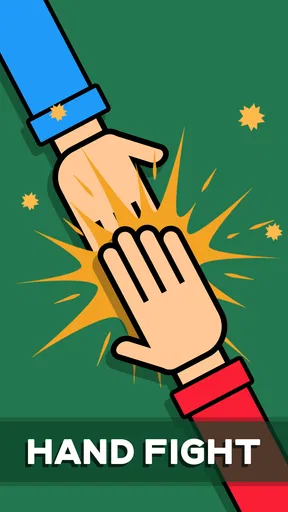
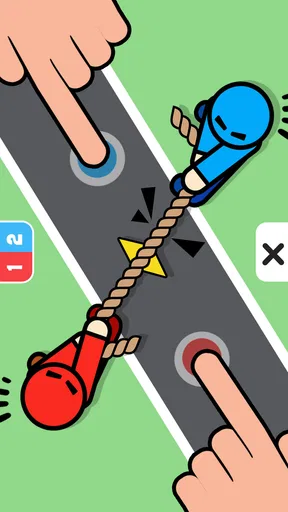
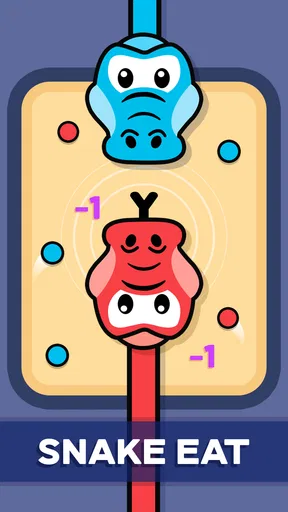
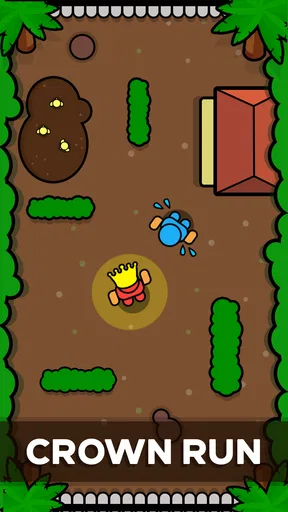
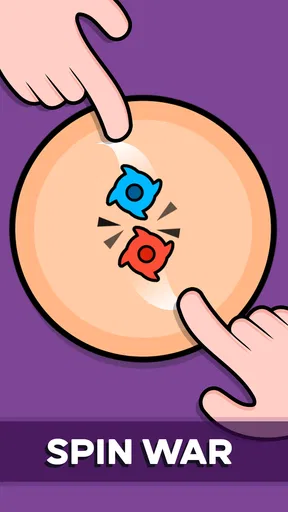
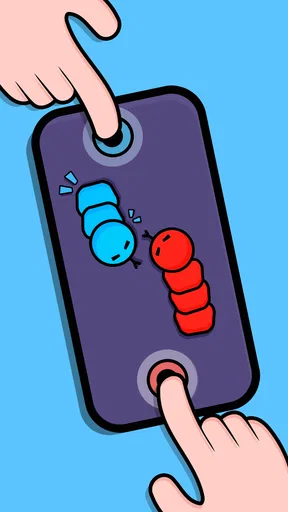
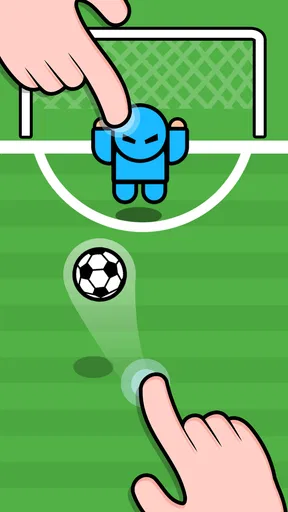
Our Review of Two Player Game: 1v1 Challenge
 Analysis by Appyee
I enjoy arcade games most when they remove the waiting around and put two people into the same moment. Two Player Game: 1v1 Challenge is built around that simple idea: a free arcade game from Game Notch where two players can face each other on one device. After spending time with it, I found its biggest appeal is not complexity but immediacy. It is easy to understand, quick to start, and naturally suited to those short breaks when a friend or family member is sitting beside you.
The game has a 4.6 average from around 82 thousand ratings and has passed 10 million installs, which fits my impression that it is designed for broad, casual use rather than a narrow group of competitive players. It is rated for Everyone, so the presentation is approachable for mixed-age households. It is free to install, with optional in-app purchases priced at $2.99 per item, making it easy to try before deciding whether it deserves a permanent place on your phone.
How the two-player format feels in everyday use
The first thing I noticed is how much the shared-screen format changes the mood. A solo arcade game can be relaxing or repetitive, but a two-player challenge creates an immediate reason to keep playing. You are not simply trying to beat a previous score; you are reacting to another person sitting next to you. That makes even a short session feel more social than the usual mobile alternative.
I would use it during a coffee break with a colleague, while waiting for food, or on a journey when two people want something more active than taking turns watching videos. It also works well at home when a younger player wants to compete with an older sibling or parent without needing a second phone. The rules are generally the sort of thing you can explain in a sentence, which matters when someone has never opened the game before.
That accessibility is also the main trade-off. Players looking for a long campaign, a carefully developed story, or deep character progression should not come here expecting a console-style experience. Its value is concentrated in the match itself. Once the novelty of challenging the person beside you fades, the experience depends heavily on whether you enjoy repeating quick arcade contests.
What makes the speed of play important
The perceived speed is one of the strongest parts of the design. The game is meant to get two people into a contest without the setup associated with more elaborate multiplayer titles. I found that useful when the available time was uncertain: a session can begin casually, and neither player has to commit to a long round of play.
That quick rhythm also makes small mistakes feel meaningful. In a slower strategy game, a poor opening can be corrected over several minutes. Here, a missed reaction or rushed decision can change the result almost immediately. I recommend playing with the phone placed on a stable surface rather than holding it loosely, especially when both players are tapping or reacting at once. That small adjustment makes the shared controls easier to read and reduces the awkwardness of passing the device around.
For a fairer match, I also suggest agreeing on the rules before starting. Decide whether you are playing one round, several rounds, or simply stopping when one person has had enough wins. This sounds minor, but it prevents the common problem where one player treats the session as a serious contest and the other treats it as a quick joke. The game is at its best when both people understand the same goal.
Where it fits beside other arcade choices
Compared with a conventional solo arcade game, this one has a clear social advantage. A solo title may offer more personal progression, a better score-chasing loop, or more ways to practice alone. Two Player Game: 1v1 Challenge instead turns the phone into a small face-to-face activity. If your priority is shared amusement in the same room, that difference matters more than having a large collection of individual modes.
It is also a different proposition from online multiplayer games. Online titles can connect you with friends who are elsewhere, but they often involve accounts, matchmaking, waiting, or a stronger dependence on a network connection. This game’s appeal is the opposite: it is for the person already next to you. If your regular gaming partner lives in another city, an online alternative will probably suit you better. If you are sitting beside someone and want to start immediately, the local format is much more convenient.
Against board games or card games, the advantage is preparation time. There is no box to unpack and no pieces to arrange. The disadvantage is that the phone remains the center of the activity, so it does not create quite the same spacious, conversational feeling as a physical game on a table. I see it as a useful companion for short gaps, not a replacement for every kind of social game.
Heavy-use moments and the phone itself
The most demanding moments are likely to be the ones in which both players are active at the same time and the screen is receiving rapid input. That is where a shared-screen arcade game has to feel responsive, because even a small hesitation can be interpreted as a mistake by the player. In my experience, the best results came from keeping the display clean, placing the handset flat, and avoiding a surface that made the phone slide during play.
Longer sessions can expose practical issues that are easy to ignore in a single round. Two people leaning over the same screen can cover part of the display with their hands, and repeated movement can make the phone shift. I would not call that a software weakness, but it is a real limitation of the format. A tablet-sized screen may be more comfortable for a group setting if the game is available there through a compatible installation, while a small phone is better for portability.
Resource demands are another consideration. The game is an arcade title rather than a visually elaborate console conversion, so I would expect it to be easier to carry around than a large, graphics-heavy game. Still, the actual experience depends on the phone, the operating environment, and what else is running. Closing an unrelated game or video app before a longer session is a sensible habit, particularly on an older device.
I would also avoid judging performance during the first few seconds after launching other demanding apps. A phone that is already busy may feel less responsive regardless of which game is open. For a quick challenge, this rarely matters. For repeated matches, starting from a clean state gives the most consistent experience and makes it easier to tell whether a problem comes from the game or from the device.
Stability, interruptions, and recovering a session
Reliability matters more in a two-player game than in a solo one because both people notice a disruption at the same time. A brief interruption does not only affect a score; it breaks the shared moment and can make the rematch feel unfair. I found the simple format helpful here because there is less emotional investment in a single session than there would be in a long campaign.
My advice is to treat a match as disposable rather than precious. If a call, notification, or accidental touch interrupts the game, restart the contest instead of arguing over which player was ahead. That approach fits the short-session design and avoids turning a casual activity into a dispute. It is one of the less obvious strengths of quick arcade play: recovery is social as much as technical.
Players should also remember that a free game with optional purchases may present a different experience depending on how they approach those extras. I prefer to begin without spending anything and decide whether the basic loop is enjoyable on its own. Since each purchase costs $2.99, repeated buying can become less casual than the initial download suggests. For a child’s device, an adult should review purchase controls before handing over the phone.
The age rating of Everyone makes the game easy to consider for family use, but that does not remove the need for normal supervision around spending or screen time. A younger player may be perfectly comfortable with the controls while still needing help understanding when a purchase is optional. That is a practical point worth handling before a competitive session begins.
Device constraints and choosing the right setting
The minimum operating requirement is Android 7.0, so the game is not aimed exclusively at the newest phones. That broad compatibility is useful for households with an older spare device, although compatibility alone does not guarantee the same comfort on every screen. A small display can make two-player interaction cramped, while a larger one may improve visibility but be less convenient to carry.
For quick use, I would choose a phone with a bright, responsive screen and enough remaining battery for the planned session. Brightness matters because two players often look at the display from slightly different angles. Battery condition matters because a social game loses its appeal if the device has to be connected to a charger in the middle of a short outing.
Heat and battery use are worth watching during extended play, even though I would not describe this as the kind of title that should automatically place extreme demands on modern hardware. If the phone becomes uncomfortable to hold, move the session to a table and take a break. That is more practical than forcing a long run simply because the game makes rematches easy.
Older hardware may also have less room for other active apps. If the game reloads after switching away from it, the safest approach is to assume that the current contest may not be preserved and start a fresh round. This is another reason I would avoid beginning a serious best-of-many match when you expect frequent interruptions. The game suits uninterrupted bursts better than stop-and-start multitasking.
Who will get the most from it
I think it is a strong fit for people who want a shared activity with almost no learning curve. Families can use it for short contests, friends can settle a playful argument, and couples can keep it available for those moments when they want interaction without committing to a full board game. Its free entry point makes the decision easy: install it, try a few matches, and see whether the person beside you enjoys the format.
It is especially appealing if your phone is usually a solo device but occasionally becomes a social screen. You do not need to organize a group, create a lobby, or ask everyone to install the same title on separate hardware. That convenience is the feature I would mention first to a friend. The game turns an ordinary pause into something two people can do together immediately.
I would skip it if you mainly play alone, dislike competitive pressure, or want a substantial progression system. It is also not the best choice for remote friends, because its central strength depends on sharing the same device and physical space. Players who need precise online rankings, extensive customization, or a long-term achievement structure will likely find a dedicated competitive game more rewarding.
My practical performance verdict
Game Notch has kept the concept focused: a free arcade experience built for direct two-person challenges, with version 1.9.4 available for compatible devices. I like that focus because it makes the game easy to recommend for a specific situation rather than pretending it should replace every other mobile game. When the phone is placed properly and both players are ready, the experience feels immediate and naturally replayable.
The limitations are equally clear. The shared screen can be physically cramped, longer sessions may become repetitive, and the format is less useful when the other player is not nearby. Performance expectations should also remain realistic on older or heavily loaded devices. A clean setup, a stable surface, and a short match structure do more for enjoyment than trying to turn it into an all-night gaming platform.
Overall, I would keep Two Player Game: 1v1 Challenge installed for spontaneous face-to-face play. Its 10 million-plus installs and strong average rating suggest that the straightforward idea has connected with a wide audience, but my recommendation is more specific: choose it when convenience and shared laughter matter more than depth. Its real strength is the fast handoff from “we have nothing to do” to “let’s play one round.” For that particular use, it is a friendly, accessible arcade option that earns its place without demanding much from the player or the phone.
Verdict
Strengths of Two Player Game: 1v1 Challenge
- Quick 1v1 matches are ideal for short gaming sessions.
- Simple controls make the game easy for new players to learn.
- Local multiplayer lets two people compete on the same device.
- A variety of mini-games keeps matches from feeling repetitive.
- Competitive rounds can be fun for parties and casual gatherings.
Limitations of Two Player Game: 1v1 Challenge
- Some mini-games may feel shallow after extended play.
- Playing on one screen can be awkward for larger devices.
- Skill balance may vary noticeably between different challenges.
- Frequent rematches can become repetitive without more progression.
- Ads may interrupt the experience, depending on the game mode.
Similar Picks in This Category
View All
Subway Surfers
SYBO Games4.6

Stickman Party 234 MiniGames
PlayMax Game Studio4.6

Subway Princess Runner
Ivy4.4

Temple Run
Imangi Studios4.2

Zombie Tsunami
Mobigame SAS4.6

Stack Ball - Crash Platforms
CASUAL AZUR GAMES4.5
Frequently Asked Questions
What is Two Player Game: 1v1 Challenge?
Two Player Game: 1v1 Challenge is a collection of quick, competitive mini-games designed for two people on the same device. Players can challenge a friend or family member in short one-on-one matches, usually taking turns or sharing the screen. The games focus on simple controls, fast reactions, timing, and friendly competition rather than complex rules or long campaigns.
Can I play Two Player Game: 1v1 Challenge offline?
The main appeal of Two Player Game: 1v1 Challenge is local multiplayer, so many of its challenges can generally be played without creating an account or maintaining an internet connection. This makes it suitable for travel, parties, and situations where Wi-Fi or mobile data is unavailable. However, advertisements, updates, analytics, or certain optional features may still require an internet connection.
Is Two Player Game: 1v1 Challenge suitable for children?
The game is generally easy for children to understand because its mini-games use straightforward objectives and uncomplicated controls. It can be a fun way for siblings or friends to compete together, although younger players may need help with advertisements, menus, or in-app prompts. Parents should also review the store’s age rating and device settings before allowing unsupervised play.
Does Two Player Game: 1v1 Challenge contain ads or in-app purchases?
Like many free mobile game collections, Two Player Game: 1v1 Challenge may include advertising, particularly between matches or while navigating the menu. The exact frequency can vary by device, version, and region. Some versions may also offer optional purchases, such as removing ads or unlocking additional content. Check the Google Play or App Store listing for current pricing details.
What devices are compatible with Two Player Game: 1v1 Challenge?
Compatibility depends on the specific Android or iOS version available in your region and the requirements listed by the developer. Before downloading, check the application page for the minimum operating-system version, storage requirements, and supported devices. Because two players share one screen, a phone or tablet with a reasonably large display can provide a more comfortable and enjoyable experience.
Play our best games!


